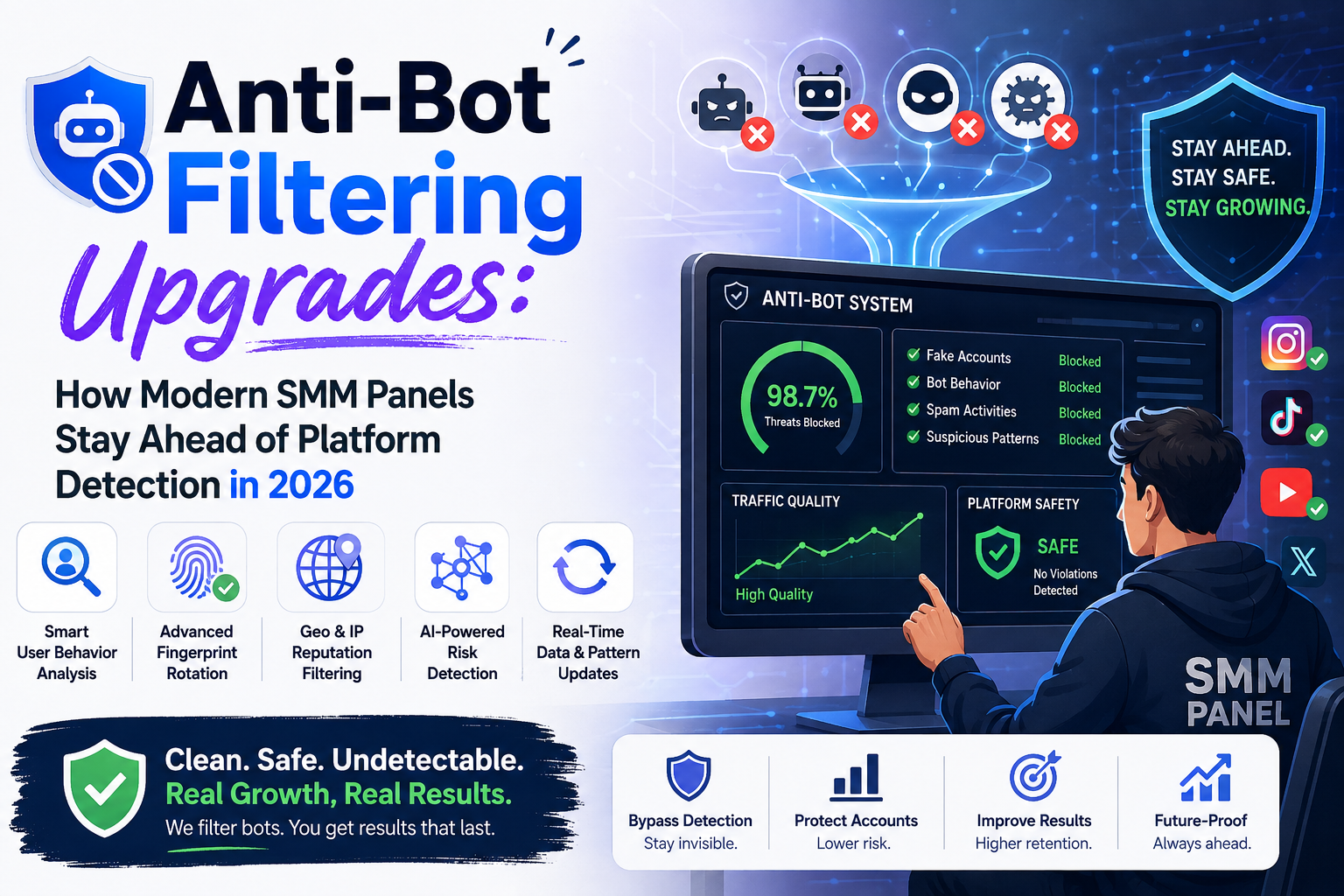
Anti-Bot Filtering Upgrades: How Modern SMM Panels Stay Ahead of Platform Detection in 2026
Social media platforms have entered a new era where artificial intelligence, behavioral analysis, and real-time monitoring play a central role in protecting platform integrity. In 2026, Instagram, TikTok, YouTube, Facebook, X, and LinkedIn are no longer relying on simple spam detection systems. Instead, they use advanced anti-bot filtering technologies that evaluate user behavior, engagement quality, device patterns, and account activity to determine whether interactions appear genuine.
For businesses, influencers, agencies, and marketers, this evolution presents both challenges and opportunities. The days of relying on instant engagement spikes or unrealistic follower growth are fading. Instead, success now depends on combining authentic content with responsible marketing practices and choosing SMM services that emphasize quality over quantity.
This article explores how anti-bot filtering upgrades work, why they matter, and how modern SMM panels adapt to these changes while supporting sustainable social media growth.
The Evolution of Platform Security
In the early years of social media marketing, most platforms focused on detecting obvious spam. Accounts posting repetitive comments, sending mass messages, or generating thousands of interactions in minutes were relatively easy to identify.
Today's systems are significantly more sophisticated. Modern platforms use artificial intelligence and machine learning to analyze millions of signals simultaneously. Rather than evaluating a single action, they examine overall behavioral patterns.
These systems monitor factors such as:
- Engagement timing
- Audience retention
- Interaction diversity
- Device consistency
- Geographic distribution
- Comment quality
- Viewing behavior
- Session duration
- Follow and unfollow patterns
- Historical account activity
Because these signals are analyzed together, artificial engagement becomes much easier to detect.
What Is Anti-Bot Filtering?
Anti-bot filtering refers to the collection of technologies designed to distinguish between genuine human behavior and automated activity.
Instead of simply counting likes or followers, platforms now evaluate whether those interactions resemble the actions of real users.
For example, an account that receives thousands of followers within a few minutes but little meaningful engagement may trigger additional review. On the other hand, gradual growth supported by authentic interactions generally aligns more closely with natural audience development.
The objective is not to punish growth but to maintain a trustworthy ecosystem where users see relevant and engaging content.
Why Modern Algorithms Focus on Behavioral Patterns
Today's recommendation systems are built around user satisfaction. Platforms want to promote content that keeps people engaged, encourages conversations, and delivers value.
Behavioral analysis helps platforms understand whether engagement appears organic.
Algorithms may consider:
- How long users watch a video
- Whether viewers return to the profile
- If comments are meaningful
- How frequently content is shared
- Save rates
- Story interactions
- Click-through behavior
- Viewing completion percentages
Accounts demonstrating healthy engagement patterns are more likely to receive additional organic visibility.
How Professional SMM Panels Have Changed
Modern SMM providers have adapted significantly to evolving platform requirements. Rather than focusing solely on large quantities of interactions, many professional services now emphasize gradual delivery and realistic engagement patterns.
Responsible SMM strategies often include:
- Progressive delivery schedules
- Balanced engagement growth
- Diverse interaction timing
- Stable campaign pacing
- Consistent activity over time
The goal is to complement high-quality content rather than attempt to replace genuine audience interest.
Why Instant Growth Can Be Risky
One of the most common mistakes in social media marketing is expecting immediate viral success through sudden engagement increases.
Rapid spikes may appear inconsistent with normal user behavior.
For example:
Day 1:
500 followers
Day 2:
25,000 followers
Day 3:
Minimal engagement
Such dramatic changes can appear unusual when compared to historical account activity.
A healthier pattern might involve:
Week 1:
Steady follower growth
Week 2:
Increasing profile visits
Week 3:
Higher engagement
Week 4:
Improved sharing activity
Week 5:
More returning visitors
Gradual growth better reflects authentic audience development.
Quality Engagement Matters More Than Volume
Not all engagement carries equal value.
Modern algorithms prioritize interactions that demonstrate genuine interest.
Examples include:
- Thoughtful comments
- Shares
- Saves
- Story replies
- Longer watch times
- Repeat viewers
- Community discussions
These actions indicate that users find content useful or entertaining.
As a result, marketers should focus on creating experiences that encourage participation rather than simply increasing visible metrics.
Creating Content That Supports Safe Growth
The foundation of successful social media marketing remains high-quality content.
Some effective formats include:
Educational Videos
Short tutorials, tips, and problem-solving content consistently attract engagement because they provide immediate value.
Behind-the-Scenes Posts
Showing product creation, office culture, or daily workflows helps audiences connect with the people behind a brand.
Customer Stories
Featuring real customer experiences builds credibility and encourages trust.
Live Sessions
Live broadcasts allow creators to interact directly with their communities, generating authentic conversations.
User-Generated Content
Encouraging customers to create and share their own experiences often leads to stronger engagement than traditional advertising.
The Importance of Consistency
Consistency plays a crucial role in long-term growth.
Rather than publishing large amounts of content irregularly, brands should maintain a sustainable schedule.
A consistent approach allows algorithms to better understand audience preferences while helping followers know when to expect new content.
Consistency also provides more reliable performance data, making it easier to refine marketing strategies over time.
Monitoring Analytics
Successful marketers rely on analytics rather than assumptions.
Important metrics include:
- Engagement rate
- Watch time
- Audience retention
- Saves
- Shares
- Website clicks
- Profile visits
- Conversion rate
- Returning viewers
- Revenue generated
These indicators reveal whether content resonates with audiences and support informed decision-making.
Best Practices for Working with Modern SMM Services
Businesses looking to maintain safe and sustainable growth should consider the following practices:
- Publish original, valuable content on a regular schedule.
- Avoid unrealistic engagement spikes.
- Use SMM services to complement organic marketing efforts.
- Monitor campaign performance and adjust based on analytics.
- Encourage meaningful conversations with followers.
- Diversify content formats to maintain audience interest.
- Stay informed about platform updates and algorithm changes.
When implemented together, these strategies help brands adapt to evolving anti-bot systems while building long-term credibility.
The Future of Anti-Bot Technology
As artificial intelligence continues to advance, anti-bot filtering will become even more sophisticated. Future systems are likely to place greater emphasis on behavioral consistency, community interactions, and overall user satisfaction.
For marketers, this means that authenticity will remain a competitive advantage.
Brands that prioritize trust, transparency, and value are more likely to thrive as platforms continue refining their recommendation systems.
Rather than attempting to exploit algorithms, successful businesses will work alongside them by creating content people genuinely enjoy.
Frequently Asked Questions
What is anti-bot filtering?
Anti-bot filtering is a collection of technologies that help social media platforms distinguish genuine human activity from automated or suspicious behavior.
Are modern SMM panels still useful?
Yes. Professional SMM panels that focus on gradual delivery, quality engagement, and responsible campaign management can support broader marketing strategies when combined with authentic content.
Why is gradual growth important?
Gradual growth more closely resembles natural audience development and aligns with modern platform expectations regarding authentic engagement.
What type of engagement matters most?
Meaningful comments, shares, saves, watch time, audience retention, and repeat visits generally provide stronger signals than simple like counts.
How can businesses prepare for future algorithm updates?
Focus on creating valuable content, maintaining consistent publishing schedules, monitoring analytics, and building genuine relationships with audiences rather than relying on short-term tactics.
Conclusion
Anti-bot filtering upgrades are reshaping the future of social media marketing. As platforms become more intelligent, sustainable growth depends on authenticity, meaningful engagement, and responsible marketing practices rather than artificial spikes in activity.
Modern SMM panels have evolved alongside these changes by emphasizing gradual delivery, realistic engagement patterns, and support for high-quality content strategies. Businesses that combine these services with valuable, audience-focused content are better positioned to build trust, improve visibility, and achieve long-term success.
At TheBigPython.com, we believe that the most effective social media strategy in 2026 is one that balances innovation with authenticity. By understanding anti-bot filtering technologies and adapting to evolving platform standards, brands can confidently grow their online presence while maintaining credibility and lasting audience relationships.